2025.01 - 2025.06 | Remote
2025.01 - 2025.06 | Remote
Game Design / Production / Team Management
Game Design / Production / Team Management

Coffee, and Animal Protection
Coffee, and Animal Protection
Cats & Coffee is a simulation game where players run a café that doubles as a haven for rescued cats. As the café owner, players craft coffee — from grinding beans and pulling espresso shots to mastering latte art — while earning profits to adopt and care for more stray cats.
I intentionally designed this game to not only displaying its detailed coffee-making experience, but also promoting animal welfare awareness: every cat featured in the game is inspired by a real-life rescue. All of those stories were collected from my friends, local animal shelters or friendly people online.
Cats & Coffee is a simulation game where players run a café that doubles as a haven for rescued cats. As the café owner, players craft coffee — from grinding beans and pulling espresso shots to mastering latte art — while earning profits to adopt and care for more stray cats.
I intentionally designed this game to not only displaying its detailed coffee-making experience, but also promoting animal welfare awareness: every cat featured in the game is inspired by a real-life rescue. All of those stories were collected from my friends, local animal shelters or friendly people online.
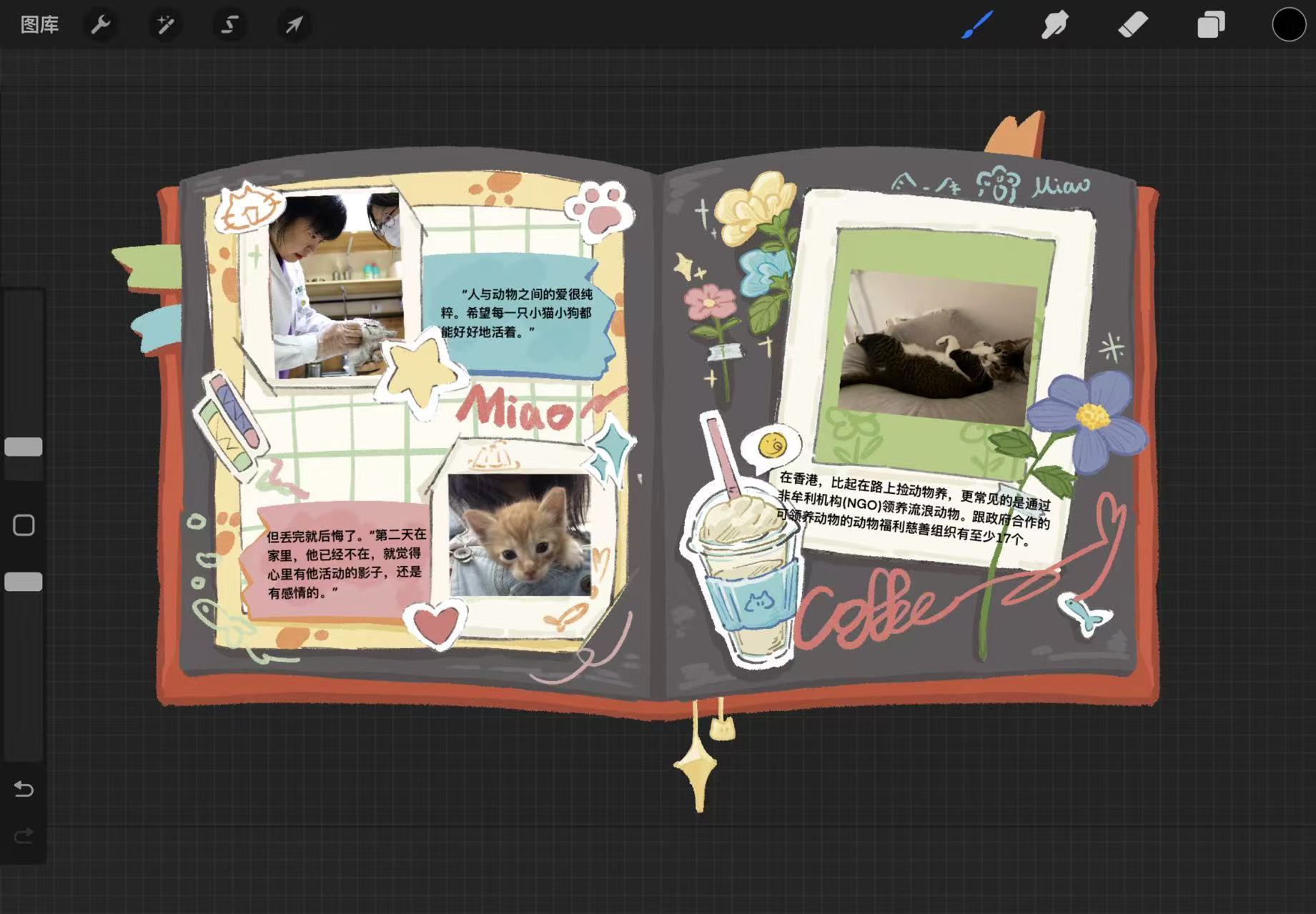
All kitties in the storybook are from real world.
All kitties in the storybook are from real world.
Initiation
Initiation
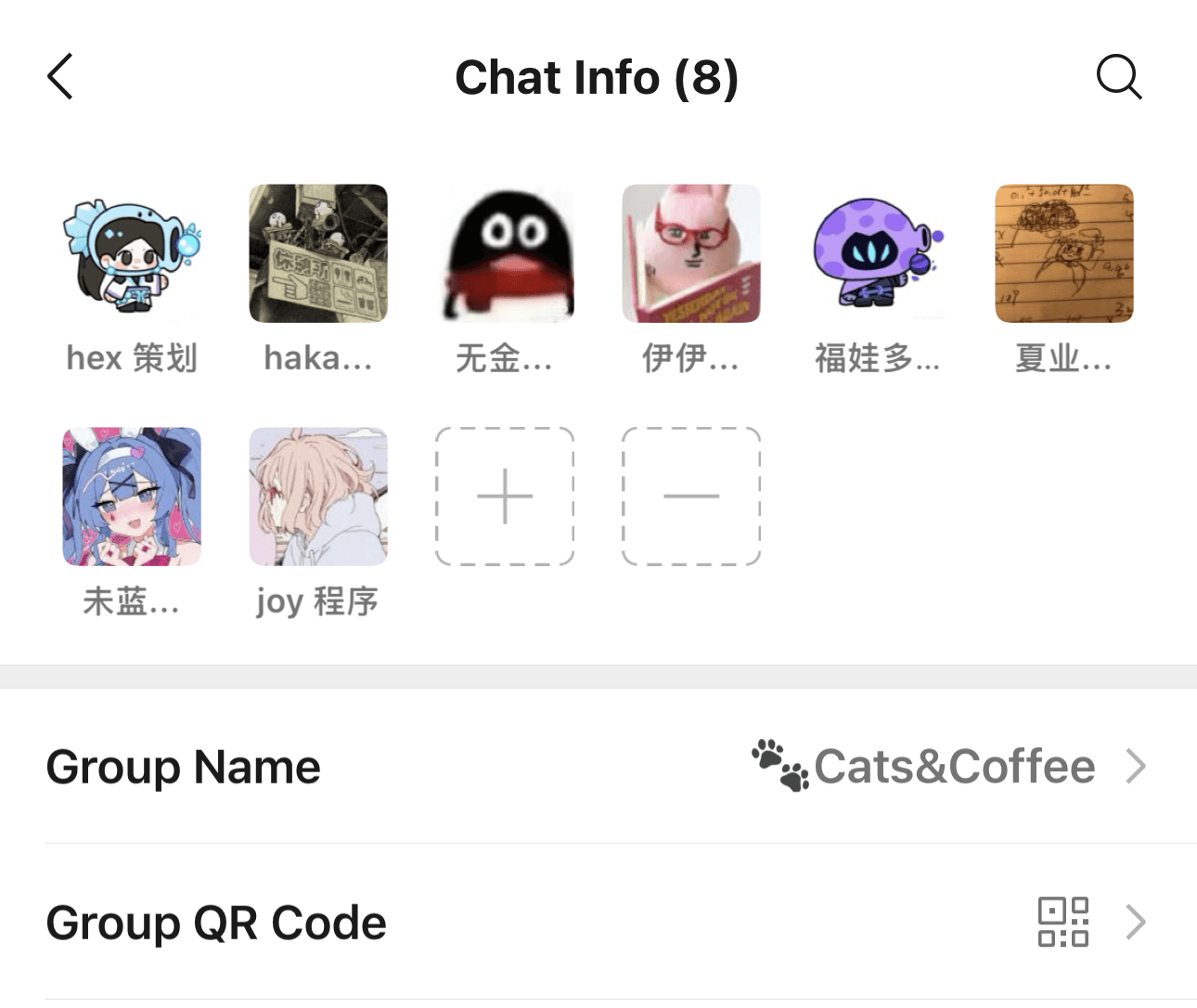
I started this project because I’ve always had a strong passion for stray animal protection. I wanted to create a game that could carry a unique narrative and fully represent the values I care about the most. So I went looking for people online (majorly in Weibo and Red Note) in the game designing community who shared similar interests — from highly realistic coffee-making simulations, to management games, to animal welfare. Eventually, I built a team of nine members from universities around the world.
I started this project because I’ve always had a strong passion for stray animal protection. I wanted to create a game that could carry a unique narrative and fully represent the values I care about the most. So I went looking for people online (majorly in Weibo and Red Note) in the game designing community who shared similar interests — from highly realistic coffee-making simulations, to management games, to animal welfare. Eventually, I built a team of nine members from universities around the world.
Preparation
Preparation
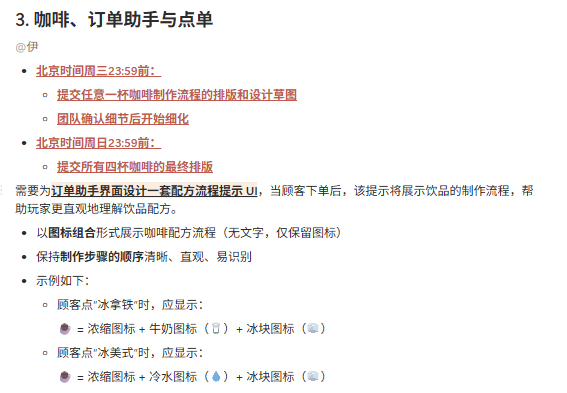
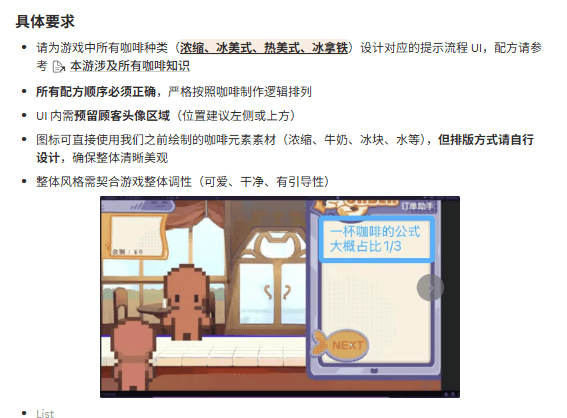
Independently, I wrote the entire Game Design Document (GDD), including art asset requirements, core game loops and logic, backend structure, and more. I even wrote a step-by-step guide on how to make coffee for team members who weren’t familiar with the process.
To make sure the game would actually be fun, I researched a wide range of simulation and management games — from the classic Papa’s Burgeria (2010) to the more recent viral hit Shawarma Legend(2024). I analyzed their strengths and weaknesses and eventually defined the model that best fit our game.
Independently, I wrote the entire Game Design Document (GDD), including art asset requirements, core game loops and logic, backend structure, and more. I even wrote a step-by-step guide on how to make coffee for team members who weren’t familiar with the process.
To make sure the game would actually be fun, I researched a wide range of simulation and management games — from the classic Papa’s Burgeria (2010) to the more recent viral hit Shawarma Legend(2024). I analyzed their strengths and weaknesses and eventually defined the model that best fit our game.
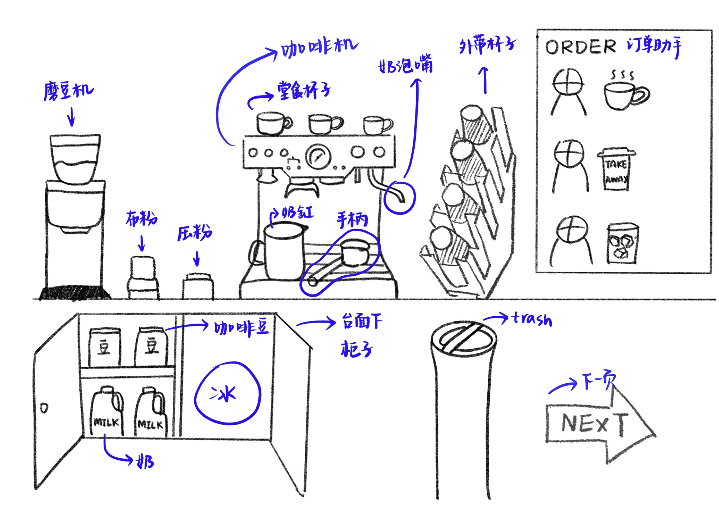
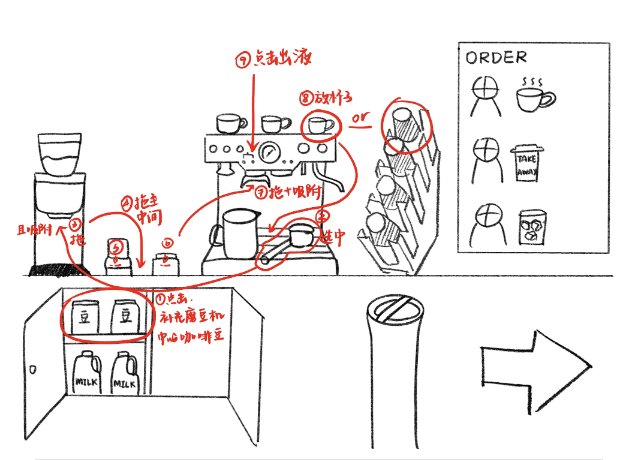
Prototyping Coffee Making Process
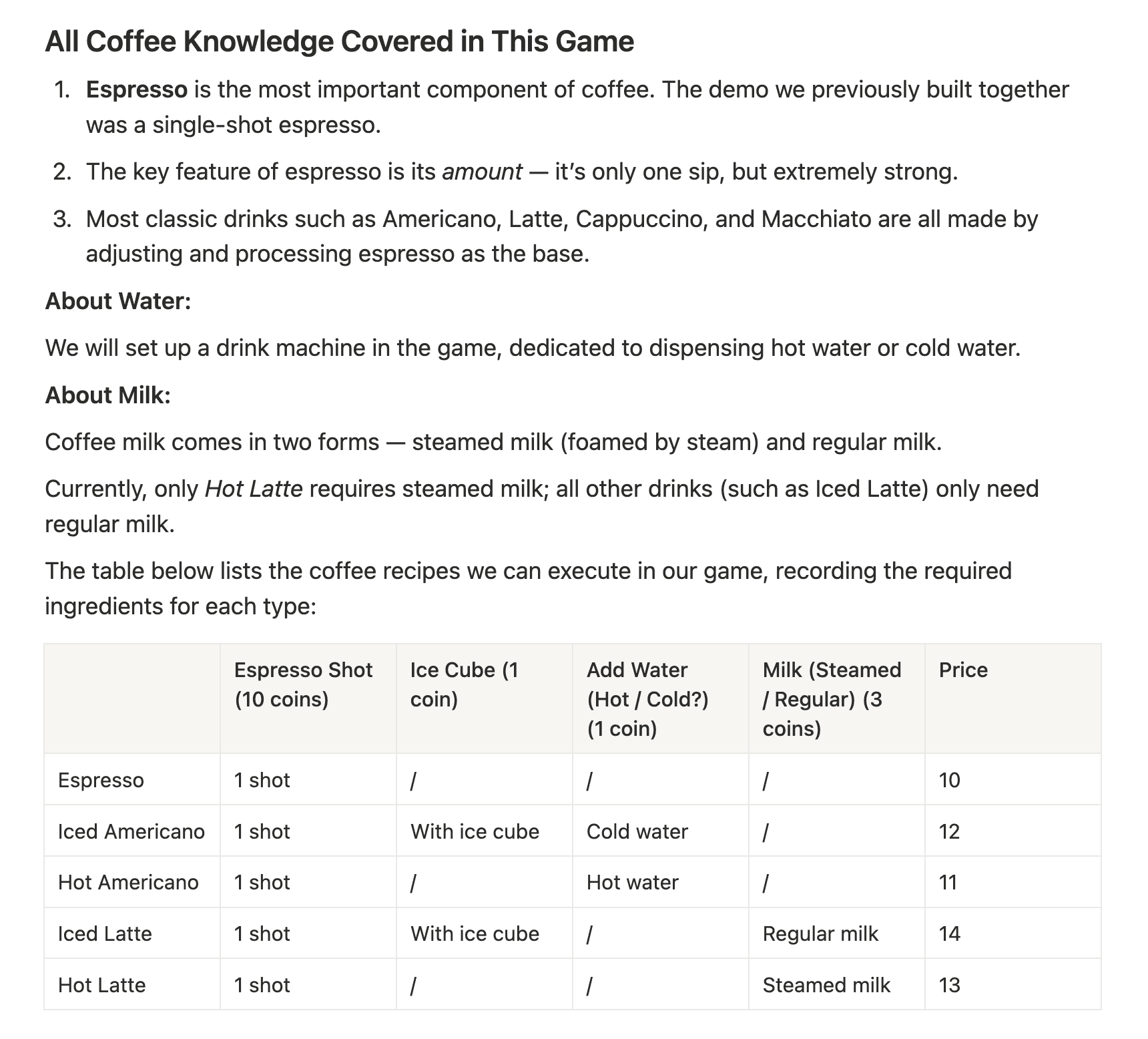
Coffee Knowledge Booklet
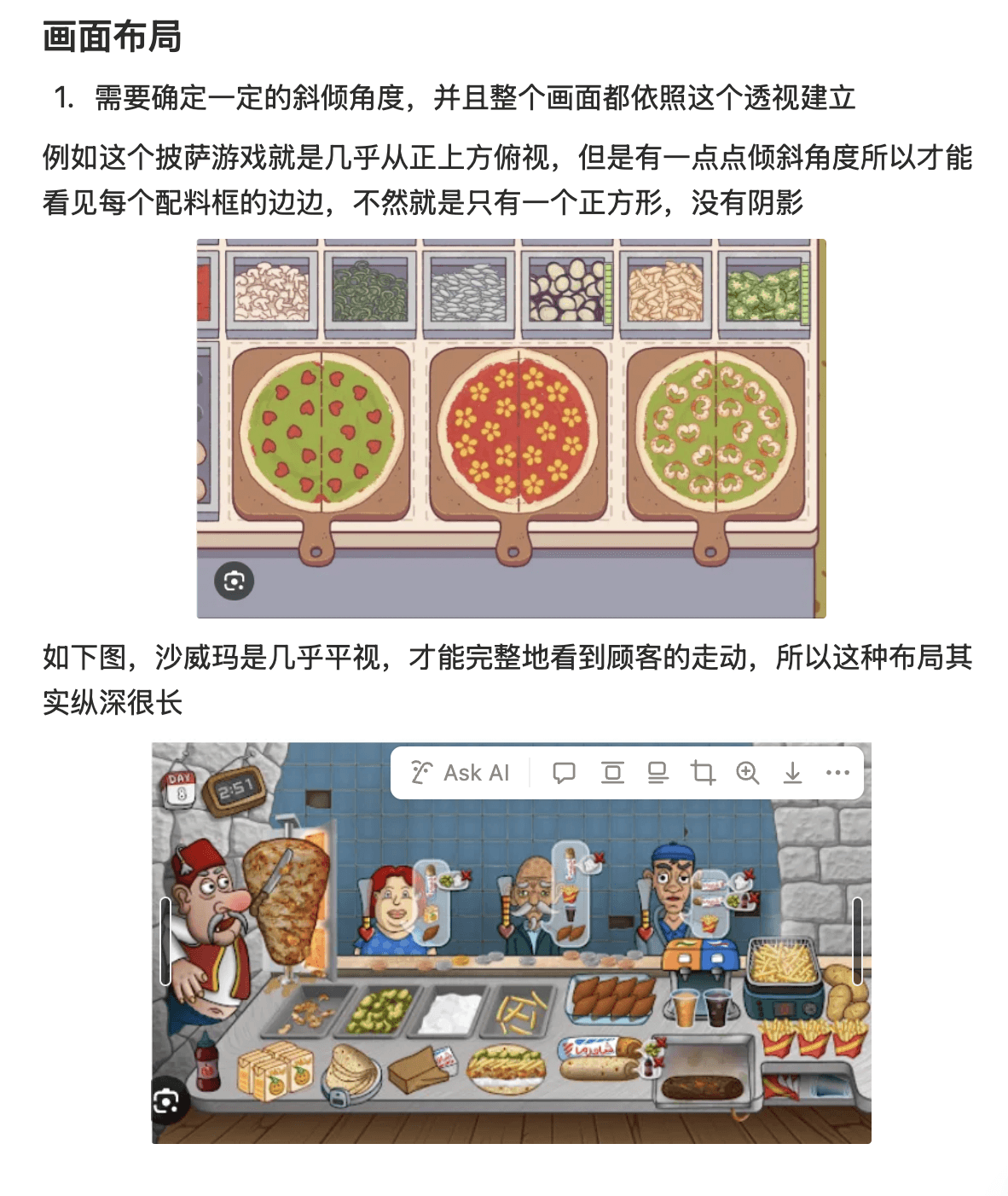
Game Genre Research
Development
Development
Our team followed rules of agile development from scratch.
We used Notion to document and track daily tasks, and I published regular requirement docs to keep everyone aligned. We managed code and digital assets through GitHub and SVN, and held stand-up meetings every other day to make sure tasks were completed on time.
When we started, I wasn’t very familiar with Unity — but this project completely reshaped my understanding of the engine and of game development as a whole.
Our team followed rules of agile development from scratch.
We used Notion to document and track daily tasks, and I published regular requirement docs to keep everyone aligned. We managed code and digital assets through GitHub and SVN, and held stand-up meetings every other day to make sure tasks were completed on time.
When we started, I wasn’t very familiar with Unity — but this project completely reshaped my understanding of the engine and of game development as a whole.
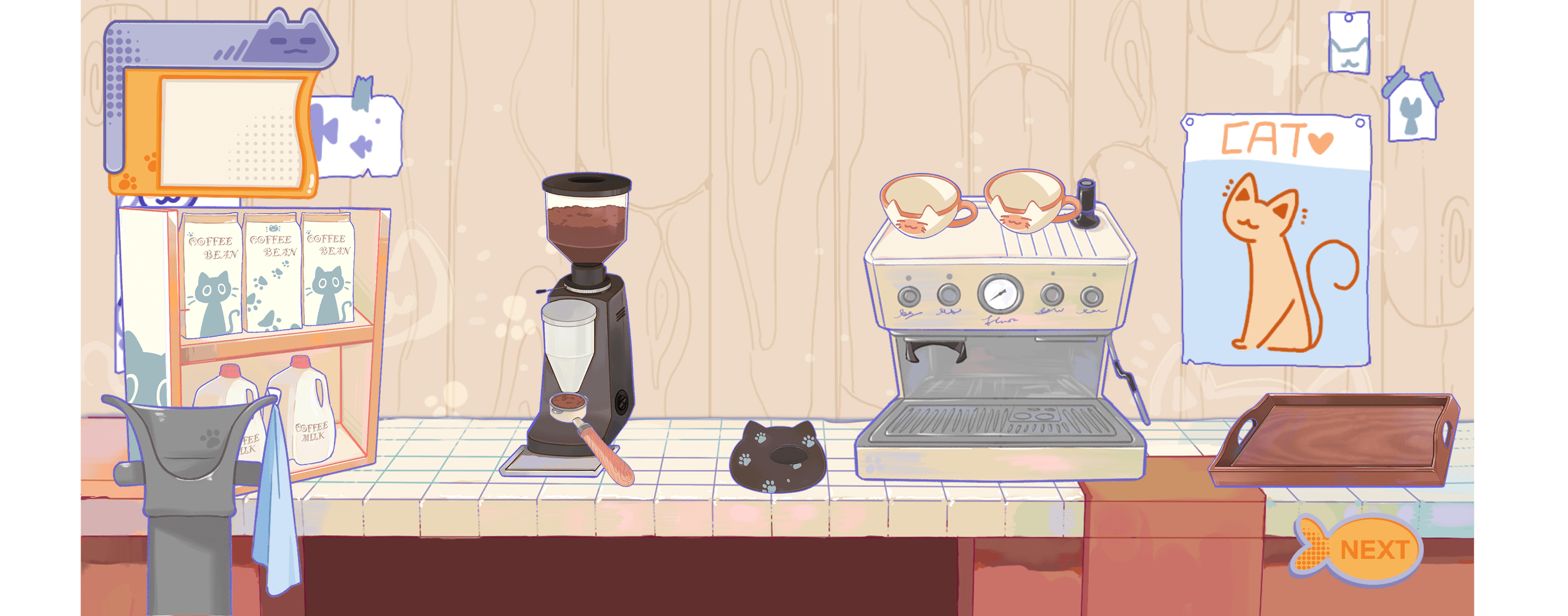
Screenshot of Beta Version
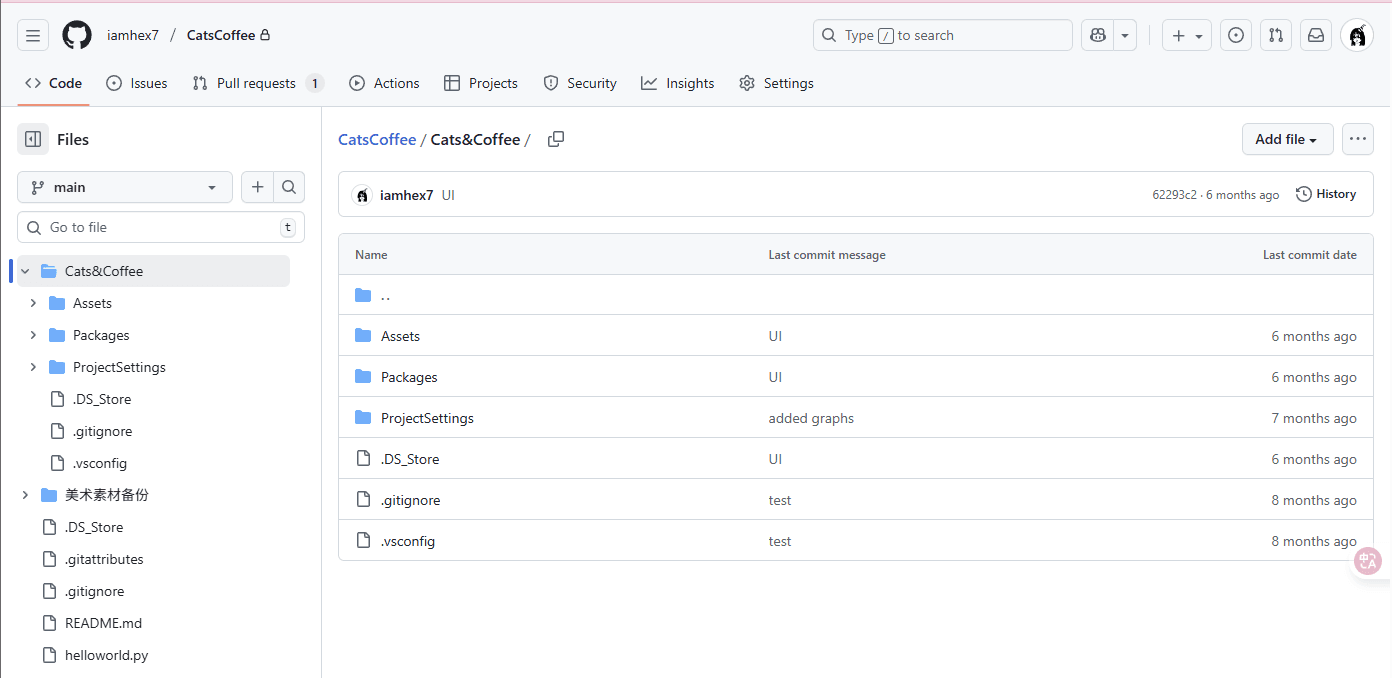
Team Management
Team Management
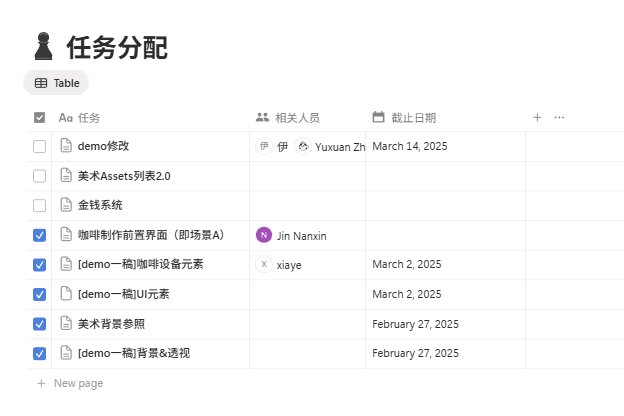
Founded and led a 9-member cross-functional team including designers, programmers, artists, and sound engineers. Managed remote collaboration, established weekly milestones, and coordinated communication across creative and technical workflows. Maintained clear documentation and ensured a cohesive creative direction throughout the development process.
Founded and led a 9-member cross-functional team including designers, programmers, artists, and sound engineers. Managed remote collaboration, established weekly milestones, and coordinated communication across creative and technical workflows. Maintained clear documentation and ensured a cohesive creative direction throughout the development process.